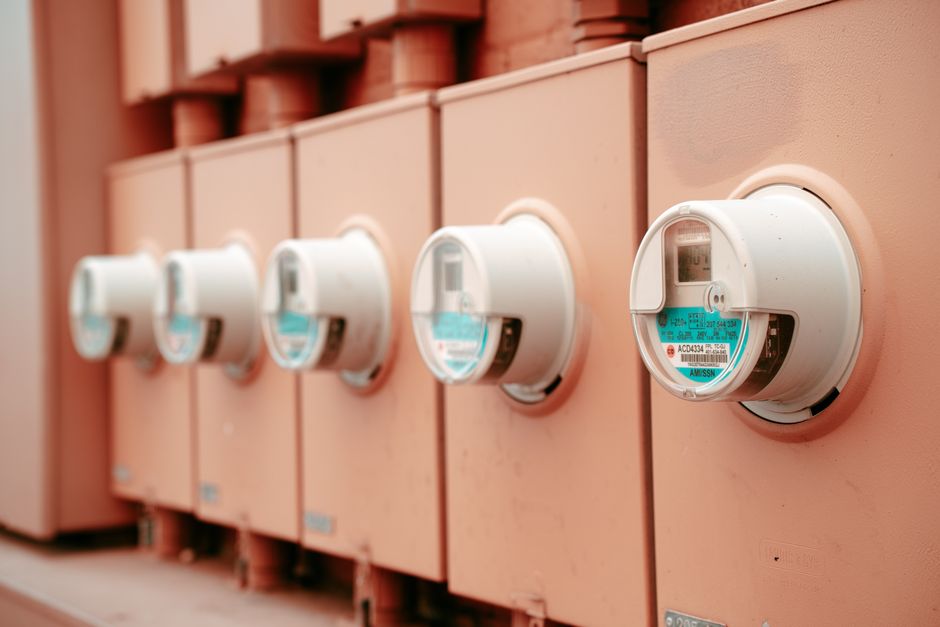
A meter-to-cash exception workflow is an operational control mechanism for identifying, validating and resolving consumption data discrepancies before financial posting.
Structuring reading ingestion, interval validation and raw data retention
Establishing an auditable meter-to-cash workflow requires maintaining an unedited repository of raw payload reads completely separate from corrected or substituted interval data. Raw meter readings, timestamp headers and device logs captured during initial ingestion serve as the source evidence base for customer queries and regulatory audits. Keeping raw ingestion records isolated prevents overwritten data trails and ensures that subsequent data validation routines remain transparent and verifiable.
Metering data for use in energy trading and billing is confidential information
— NERSA Distribution Metering Code6.1, August2019, section5
Validation protocols test incoming payloads for missing meter identification numbers, timestamp clock drifts, out-of-bound volume spikes and incomplete interval records. In electricity reticulation, the National Energy Regulator of South Africa (NERSA) Distribution Metering Code Version 6.1 (August 2019) sets electricity tariff metering standards, requiring licensees to collect, validate and store metering data in a central database under the requirements applicable to the installation. NERSA Code 6.1 applies strictly within its defined electricity reticulation scope and does not govern water networks.
For water distribution, the Water Research Commission (WRC) Report TT300/07 (January 2007) provides a historical water-balance methodology for categorising system input volumes, metered consumption and unbilled authorised use. National Treasury's 2008 Local Government Capital Asset Management Guideline offers historical municipal governance context for establishing internal control systems and maintaining accurate records, rather than serving as current accounting law.
Managing data substitutions, estimation journals and technical roles
When interval validation detects missing payload data or communication failures, operators execute approved estimation algorithms and record adjustments in a dedicated substitution journal. Data substitutions must follow strict exception rules to prevent unverified entries from entering customer billing schedules. Proposed validation workflows, exception forms and operational roles represent advisory internal control design rather than mandatory statutory rules.
Under NERSA Distribution Metering Code Version 6.1 (August 2019), licensees responsible for electricity data validation must record all data substitutions in a dedicated journal, apply the consultation provisions and exceptions in section4.7, and provide access to substitution logs upon request. Maintaining a transparent substitution journal ensures that estimated billing entries can be audited against technical field logs while preserving original raw data files in central databases.
Competent technical duties must remain distinct across utility sectors. Electrical metering engineers manage instrument transformer ratios, phase angle alignments and automated meter reading interrogation protocols under NERSA Code 6.1. Conversely, water network engineers evaluate hydraulic pressure zones, customer meter under-registration and physical leak detection under WRC TT300/07 concepts.
Aligning billing interfaces, approved adjustments and collection realities
Once interval data satisfies validation checks, consumption readings transition across the billing interface to calculate customer charges. Finance leaders and utility managers must maintain a strict conceptual boundary between billed charges and cash collections, as billed consumption represents potential revenue that remains subject to customer payment behaviour and credit control enforcement.
The historical WRC TT300/07 framework distinguishes billed authorised consumption from unbilled authorised use, apparent losses and real losses, highlighting that billed utility water in South Africa is not automatically paid for by consumers. Uncollected accounts represent non-recovered revenue rather than immediate cash. Converting billed charges into cash receipts depends on customer tariff structures, billing accuracy and underlying consumer affordability.
Crucially, an automated system flag or unexplained volume residual across a distribution boundary must never automatically be conflated with theft or illegal abstraction. Volume residuals frequently arise from reading cycle mismatches, unbilled authorised operational consumption, or customer meter under-registration. Categorising all unaccounted volumes as theft obscures technical network issues and prevents effective operational remediation.
Operational exception workflow and dashboard measures
To maintain control over meter-to-cash data streams, utilities should implement a structured exception workflow that assigns primary ownership, required evidence and closure testing procedures to specific exception categories.
| Exception Category | Required Evidence | Responsible Owner | Next Test & Closure |
|---|---|---|---|
| Missing Identifier / Payload Gap | Raw ingestion file & meter master cross-reference log | Meter Data Controller | Re-query device endpoint & verify point-of-supply mapping |
| Out-of-Bound Interval Reading | Unedited raw payload & historical consumption profile | Technical Metering Specialist | Execute physical meter test & confirm calibration status |
| Unapproved Data Substitution | Substitution journal entry & customer consultation log | Revenue Protection Lead | Validate estimation math & obtain authorised technical sign-off |
| Billing Interface Mismatch | Staging file log & customer billing ledger extract | Billing Operations Manager | Reconcile interface batch totals & re-run staging validation |
Executive oversight relies on structured dashboard metrics that track data stream integrity, exception resolution rates and reconciliation performance across defined source periods. Operational dashboard measures must avoid arbitrary service level targets or fictitious benchmarks, focusing instead on transparent mathematical formulas that track system coverage and data quality.
Proposed operational measures should retain both the numerator and denominator, source period and exclusions:
- Identifier coverage: active meters mapped to a verified account and supply point, compared with the defined active meter population. Record whether disconnected, new or retired devices are included.
- Ingestion completeness: received reading records compared with the expected records for the same devices and intervals. Separate a genuinely missing reading from a duplicate or rejected transmission.
- Substitution use: substituted intervals compared with the agreed interval population, retaining the estimation basis and the validation exceptions. A change in this measure does not itself prove a meter fault.
- Billing interface exceptions: records rejected or unmatched at the interface compared with submitted records for the same batch. Retain retries separately so that repeated attempts do not inflate the denominator.
- Collection follow-up: reconcile cash applied to a defined billing cohort with that cohort’s charges, separately showing arrears, credits, refunds and unapplied receipts. Cash received during a month is not necessarily payment for that month’s billed consumption.
These measures are proposed operational tools, not regulator-prescribed benchmarks. National Treasury’s historical asset guidance supports accountable records and cross-functional ownership; the utility must agree how each measure will be produced and reviewed.
Agree the expected population and explain any missing identifiers, excluded records or unresolved reconciliation items. Acceptance should test the scoped controls and preserve open exceptions; a dashboard should not convert incomplete data into an assertion of full coverage.
What good looks like
In a mature institutional meter-to-cash environment, technical operations, data management and corporate finance operate within an integrated control framework that safeguards raw data integrity and ensures transparent financial reporting. Executive leadership enforces clear delegation of duties, ensuring that raw payload reads remain unedited in primary databases while data substitutions are fully documented in substitution journals.
metering practices and data management comply with applicable sector standards—such as NERSA's Distribution Metering Code 6.1 for electricity database administration and data verification, and the WRC TT300/07 historical water balance framework for auditing water supply networks. By documenting coverage limitations and testing agreed controls and rigorous exception tracking, utility leaders protect state resources and sustain long-term operational integrity.
Sources
Frequently Asked Questions
How does raw data retention differ from data substitution records?
Raw data retention preserves unedited payload reads and timestamp headers in primary central databases as source evidence under the applicable retention policy, whereas data substitution records document approved estimations and mathematical adjustments in a separate substitution journal.
Why must electricity metering standards be kept separate from water reticulation models?
Electricity work requires energy measurement and electricity-specific validation within the applicable metering framework, whereas water distribution under WRC TT300/07 concepts evaluates hydraulic pressure zones and fluid volume balances.
Why is an automated billing flag or volume residual not automatically classified as theft?
An automated system flag or unexplained volume residual across a distribution boundary includes physical network leakage, customer meter under-registration, unbilled authorised operational consumption and reading date mismatches, requiring systematic investigation before assuming illegal abstraction.
Why are billed utility charges not automatically equivalent to cash collections?
As highlighted in the historical WRC TT300/07 framework, billed charges represent potential revenue that depends on customer payment compliance, credit control enforcement and consumer affordability, meaning uncollected billed charges represent non-recovered revenue rather than immediate cash.
What role do National Treasury guidelines play in meter-to-cash exception governance?
National Treasury's 2008 Local Government Capital Asset Management Guideline provides historical municipal asset management guidance context for establishing internal control systems, safeguarding assets and maintaining accurate records, serving as advisory governance principles rather than current accounting law.
For wider context, read the meter data and smart metering overview.