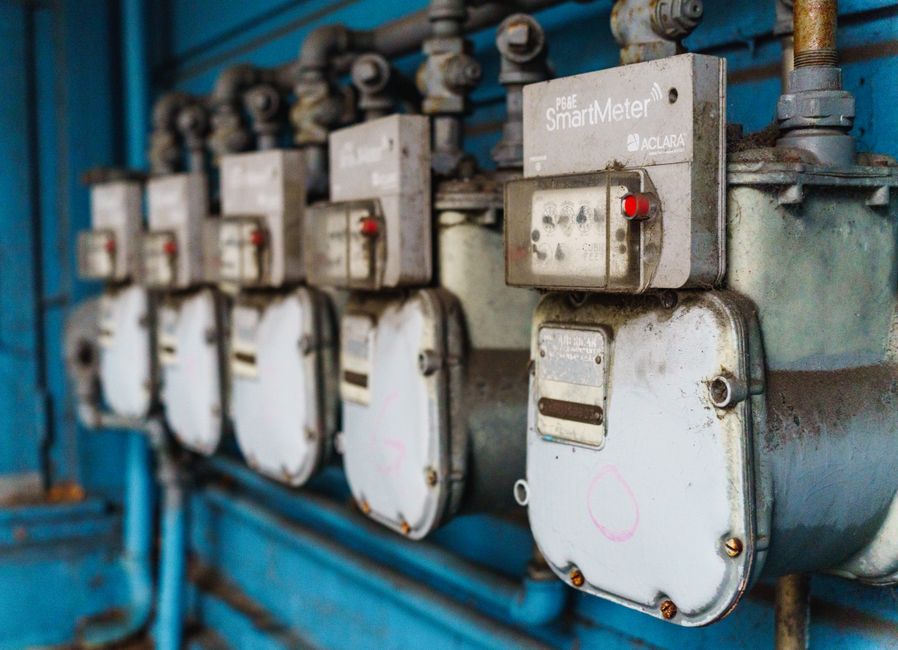
Connecting meter-data management to billing and financial reconciliation is an operational method for validating consumption data before ledger posting.
Ingestion, identification and timestamp validation
Establishing a reliable meter-to-ledger workflow requires treating data ingestion, interval validation, billing interface staging, and cash collection as distinct operational stages. Data ingestion serves as the technical entry point where raw meter reads and event logs are imported into digital systems. Ingestion must be kept separate from validation and billing to ensure unverified field data is never posted directly to customer ledgers.
Metering data for use in energy trading and billing is confidential information
— NERSA Distribution Metering Code6.1, August2019, section5
For electricity reticulation, the National Energy Regulator of South Africa (NERSA) Distribution Metering Code Version 6.1 (August 2019) specifies that licensees must retrieve, validate, and store official metering data in a central database under the requirements applicable to the installation. NERSA Code 6.1 applies strictly within its defined electricity reticulation scope and does not govern water supply networks.
In water reticulation, the Water Research Commission (WRC) Report TT300/07 (January 2007) outlines a historical water-balance methodology for recording system input volumes, metered consumption, and authorised unmetered use. National Treasury's 2008 Local Government Capital Asset Management Guideline provides dated municipal governance context for establishing internal controls over data systems, rather than current accounting rules.
Estimations, substitution journals and technical role separation
During the validation stage, automated rules test meter payloads for missing time intervals, clock drifts, unit mismatches, and out-of-bound readings. When validation rules detect corrupted or missing data, operators apply approved estimation algorithms and record substituted values in a dedicated substitution journal. Data substitutions must follow strict exception workflows to maintain an auditable trail prior to interface transfer.
Under NERSA Distribution Metering Code 6.1 (August 2019), licensees responsible for electricity data validation must document all data substitutions in a dedicated journal and address the consultation provisions and stated exceptions in section4.7 of that edition. Maintaining a transparent substitution journal ensures that estimated billing entries can be audited and verified against technical field records.
Technical roles must also remain distinct across utility sectors. Competent electrical metering personnel should assess configuration, measurement and data retrieval issues within the applicable electricity framework. Conversely, water network engineers focus on hydraulic pressure zones, customer meter under-registration, and physical leak detection under WRC TT300/07 concepts.
Billing interface reconciliation and financial adjustments
Once interval data passes validation, readings transition across the billing interface to produce customer invoices. Finance and utility decision-makers must recognise that billed consumption volumes do not automatically equal cash collections. Billed charges represent potential revenue that remains subject to customer payment performance and credit control enforcement.
The historical WRC TT300/07 framework distinguishes billed authorised consumption from unbilled authorised use, apparent losses, and real losses, highlighting that billed utility water in South Africa is not automatically paid for and uncollected accounts represent non-recovered revenue. Converting billed volumes into cash depends on tariff structures and customer payment compliance.
Crucially, an unexplained volume residual across a distribution network must never automatically be attributed to theft or illegal consumption. Residual variances frequently stem from reading cycle mismatches, meter under-registration, or unbilled authorised operational consumption. Proposed validation journals and reconciliation controls represent internal governance practices rather than statutory rules.
Control governance and operational readiness
Effective governance requires integrating technical data validation with financial ledger controls to prevent billing errors and maintain balance sheet integrity. Establishing cross-functional feedback loops ensures that billing exceptions, meter fault logs, and customer queries are returned to technical metering teams for prompt field investigation.
Proposed internal control arrangements for meter-to-ledger integration include:
- Verification of point-of-supply commercial boundaries and meter identification parameters prior to interface transfer.
- Automated exception flags for out-of-bound consumption spikes, clock drift errors, or missing interval payloads.
- Formal sign-off on data substitution journals by authorised technical controllers before billing schedule execution.
- Reconciliation at an agreed cadence between meter-data sub-ledgers, billing interface logs, and general ledger financial accounts.
The table below outlines an advisory control matrix detailing key stages, technical dependencies, control owners, and acceptance criteria across the meter-to-ledger workflow:
| Stage | Dependency | Control Owner | Acceptance Criteria |
|---|---|---|---|
| Ingestion & Header Validation | Active meter master file & point-of-supply mapping | Meter Data Controller | Payload ingestion complete with verified timestamps and unit tags |
| Validation & Substitution | Approved estimation rules & exception journal log | Technical Metering Specialist | Agreed completeness tests executed; gaps and substitutions recorded with basis and owner |
| Billing Interface Reconciliation | Interface protocol & customer tariff master file | Billing Operations Lead | Scoped source-to-interface reconciliation completed; excluded or mismatched records assigned |
| Financial Adjustment & Feedback | Authorised adjustment journal & credit control ledger | Revenue Finance Controller | Verified general ledger posting with documented feedback to technical metering teams |
Implementing structured controls across ingestion, validation, billing, and financial reconciliation safeguards public resources and supports traceable financial records and exposes unresolved limitations.
Sources
Frequently Asked Questions
How does meter-data management differ from billing and cash collection?
Meter-data management is the technical process of ingesting, validating, and storing raw meter reads and event logs, whereas billing applies approved tariffs to validated consumption data to generate customer invoices, and cash collection handles the recovery of outstanding receivables.
Why must electricity data validation protocols be kept distinct from water reticulation models?
Electricity work requires its own energy boundary and applicable metering validation under the electricity framework, whereas water distribution evaluates hydraulic pressure zones and fluid balances under WRC TT300/07 concepts.
What governs data substitutions and estimation records in electricity metering?
Under NERSA Distribution Metering Code Version 6.1 (August 2019), licensees must document all electricity data substitutions in a dedicated journal, apply the consultation provisions and exceptions in section4.7, and maintain records in a central database under the requirements applicable to the installation.
Why are billed utility consumption volumes not automatically equivalent to cash receipts?
As highlighted in the historical WRC TT300/07 framework, billed consumption represents potential revenue that depends on customer payment compliance, credit control enforcement, and affordability, meaning uncollected billed amounts represent non-recovered revenue rather than immediate cash.
How do National Treasury asset guidelines relate to meter-data management governance?
National Treasury's 2008 Local Government Capital Asset Management Guideline provides historical municipal asset management guidance context for establishing internal control systems over data records and safeguarding infrastructure assets, serving as advisory governance principles rather than current accounting law.
For wider context, read the meter data and smart metering overview.