
When it comes to understanding a business, there are few financial statements more important than understanding your balance sheet. The balance sheet offers critical insight into the health of a business that can be useful to various interested parties:
- Potential investors weighing a decision to invest your a company
- You business owners to craft more effective organizational strategy
- Employees to adjust their processes to better reach shared organizational goals
Whether you’re a business owner, employee, or investor, understanding how to read and understand the information in a balance sheet is an essential financial accounting skill to have.
Here’s everything you need to know about understanding a balance sheet, including what it is, the information it contains, why it’s so important, and the underlying mechanics of how it works.
Understanding your balance sheet: What exactly does a balance sheet do?
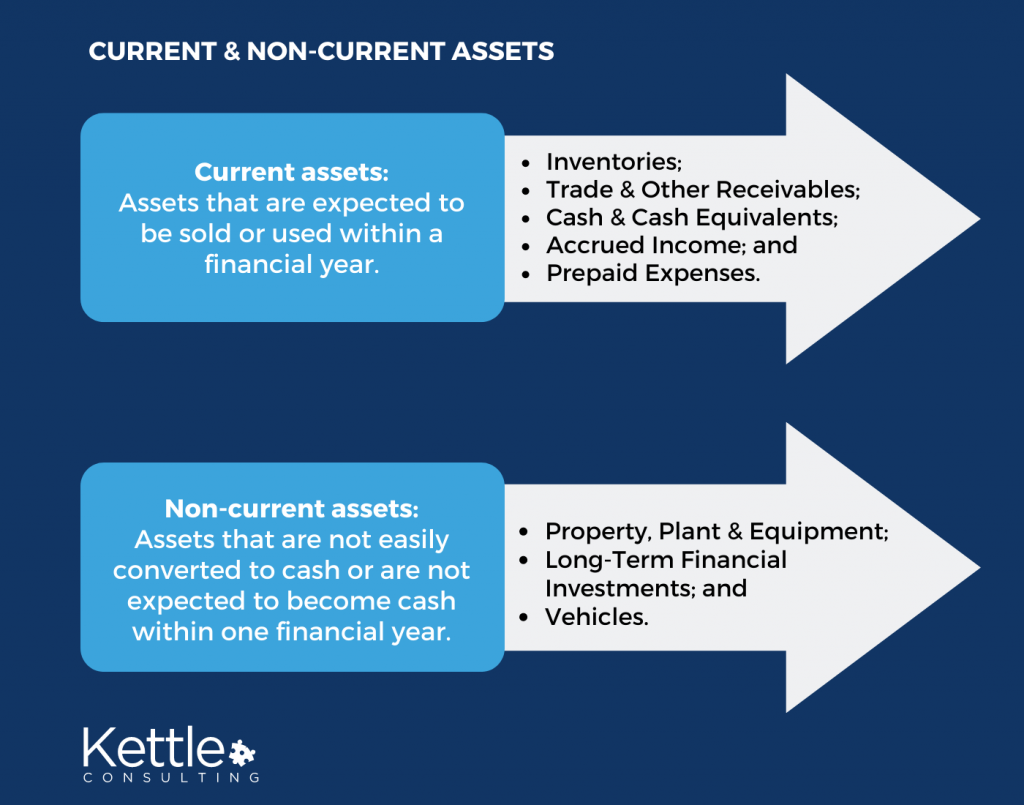
Understanding your balance sheet: What are Assets?
to
Understanding your balance sheet: What are Liabilities?
from

Understanding your balance sheet: What is Owner's Equity?
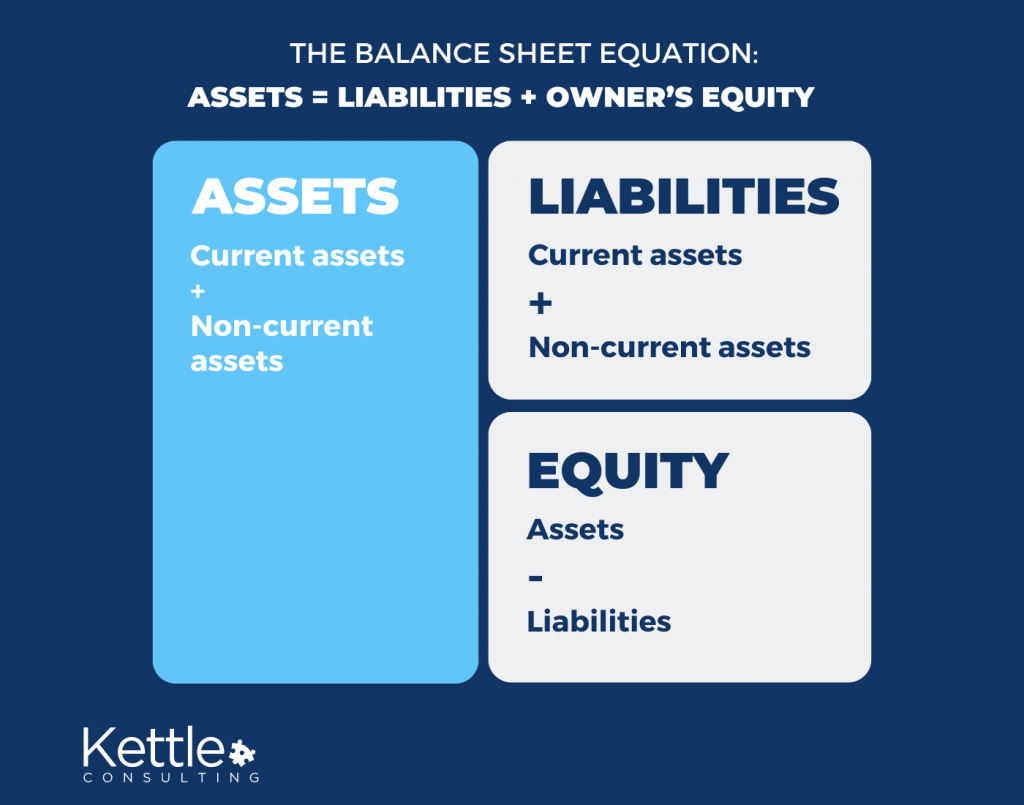
Assets = Liabilities + Owner’s Equity.
Understanding your balance sheet: Financial Ratios
Liquidity ratios
Current ratio = Current assets/ Current liabilities Quick ratio = (Current assets – Inventory)/ Current liabilities
Solvency ratios
Debt to equity ratio = Debt outstanding/ Equity
Interest coverage ratio = Earnings before interest and tax/ Interest expenses
Efficiency ratios
Return on equity = Net Income/ Shareholder’s equity Return on assets = Net Income/ Total Assets
info@kettleconsulting.co.za
011 025 1446
021 003 8000